The ultimate guide to different tattoo styles explained
Discover popular ink art trends featuring bold black outlines in American Traditional and intricate patterns in Blackwork. Each drawing style offers unique traits that influence how your tattoo ages.
By Elias Varga, editor · Updated · 6 min read
On this page
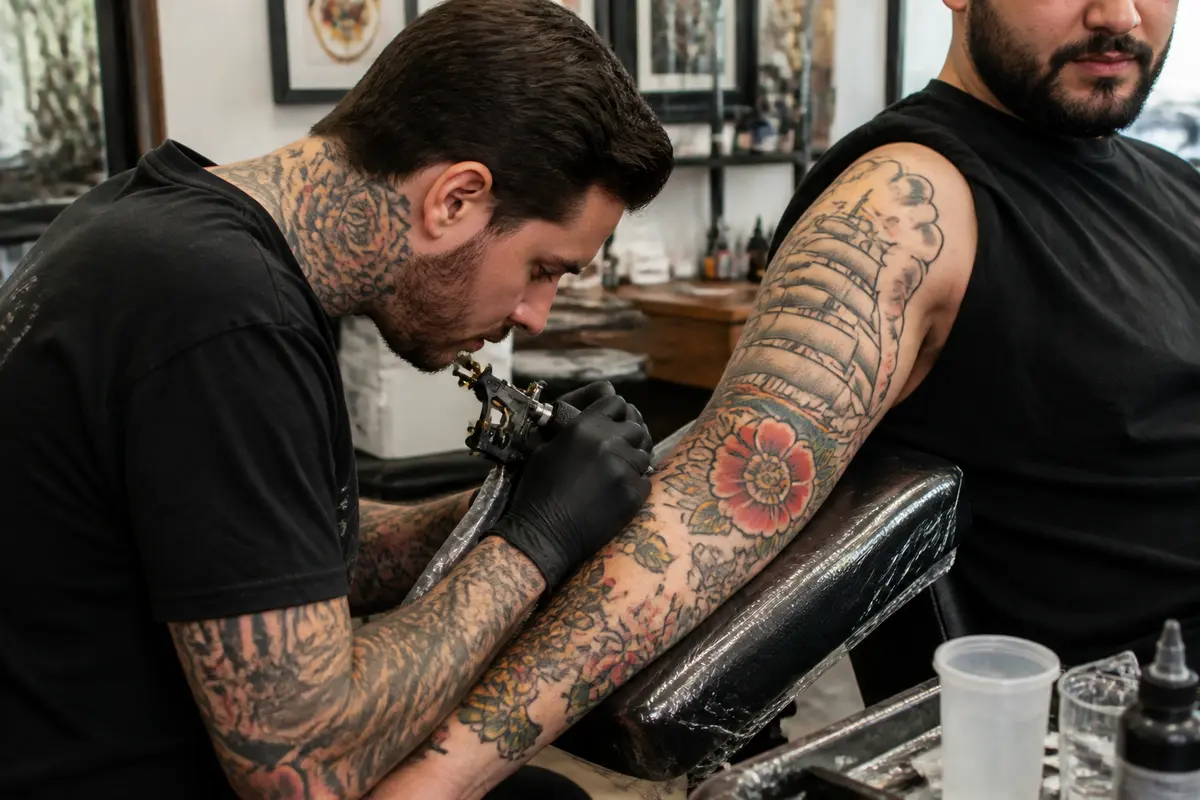
What to know: The broad category of popular tattoo styles includes American Traditional, Blackwork, and Neo-traditional techniques, each defined by distinct visual elements like bold black outlines or intricate geometric shapes. Notably, American Traditional tattoos retain their clarity for several decades due to thick lines and restricted color palettes. Emerging styles like micro-realism and trash polka reflect ongoing innovations blending photorealism and abstract motifs.
How do you choose a tattoo style that lasts and suits your personality? Many tattoo enthusiasts overlook how factors like design composition and linework impact the longevity and clarity of ink on skin. Fine-line and geometric tattoos require consideration of placement and skin type to preserve their delicate details, while large-scale styles such as Japanese Traditional offer rich narratives suited for broader canvases. Understanding variations in style and cultural origins enables better decisions for meaningful and enduring body art. After exploring these aspects, you will gain insight into matching specific designs to personal preferences and physical areas for optimal aesthetic and durability.
Popular tattoo styles and their visual hallmarks
Traditional Americana: bold lines in tattoo style
The bold black outlines combined with lively, saturated colors define one of the most recognizable tattoo genres, often called American Traditional or old school. Images like roses, swallows, anchors, ships, and military themes stand out by their simplification and easily readable designs. These tattoos maintain color and line clarity for decades, especially due to the thick line weight and limited color palette used.
In particular, line thickness and saturation impact how these designs fade over time. Tattoos with bolder black outlines tend to resist blurring and fading better, reducing the need for frequent touch-ups. Despite the simple look, these classic images carry strong symbolism, such as swallows meaning a safe return or anchors representing stability.
Among this tradition, the style popularized by Sailor Jerry Collins stands out, featuring sharper shading, nautical motifs, and a sense of humor. His work emphasized designs that remain clear on the skin over many years.
Blackwork and geometric: crisp tattoo style lines
Blackwork tattoos rely solely on black ink, embracing solid fills, heavy shading, and intricate patterns. Negative space, the untouched skin, often becomes part of the design, enhancing contrast and visual complexity. Geometric tattoos use repeated shapes, symmetry, and precise linework that can appear simple or elaborately detailed.
The use of negative space in blackwork can influence how the tattoo ages, since skin left untouched can soften the impact of ink over time. This interplay can help maintain clarity although careful planning of the design’s composition is necessary. Geometric styles often incorporate mandalas and sacred geometry, with shapes following the body’s contours for the best aesthetic effect.
Evolution of tattoo styles through history
Origins: tribal, sailors, and Yakuza roots
Tattoo art is ancient, traced back over 5,000 years, including on mummified remains in Europe. Many indigenous cultures worldwide developed varied tattoo traditions with unique designs and meanings. For a deeper understanding, see the history of tattooing.
For example, Polynesian and Māori tattoos feature tribal patterns deeply tied to identity and status. American Traditional tattooing grew from sailors and military imagery, refined by pioneers like Sailor Jerry, who ensured these designs were practical for the skin and style.
Japanese tattooing, or Irezumi, started in the Edo period, adopting motifs such as koi, dragons, samurai, and clouds. Tattoos became taboo socially, leading criminal groups like the Yakuza to embrace them for rebellion and allegiance. Traditional Japanese hand tattooing, tebori, employs a manual needle rod technique rather than machines.
Cross-cultural fusion and modern hybrids
Modern tattoo art sees styles blending, creating hybrids that merge elements from several traditions. Neo-traditional tattoos add more detailed shading and color variation to old school bold outlines. New School style exaggerates features using vivid colors and cartoon influences. Mashup tattoos combine diverse techniques and cultural elements freely, sometimes requiring awareness of cultural significance.
This fusion has produced innovative forms such as trash polka, mixing photorealism with abstract red and black accents, or cybersigilism which features thorn-like angular forms in black and grey. Popular geometric styles draw from tribal origins but are adapted for aesthetic and body flow considerations.
The editors’ angle. « Choosing an artist experienced in your preferred style and understanding how tattoos age on different body areas ensures your artwork remains beautiful for years. »
Origins and symbolism of classic motifs
Many tattoo motifs have rich cultural significance. Traditional designs include anchors symbolizing stability and safe journeys, and swallows representing safe homecomings. Japanese symbols like koi fish and dragons signify perseverance and strength, while samurai imagery recalls honor and protection.
Celtic tattoos showcase continuous knotwork representing eternity and interconnectedness, often integrating animals and crosses. Chicano style combines fine black and grey shading with religious and political imagery, reflecting cultural heritage.
Realistic portrait tattoos often commemorate loved ones or pets, carrying personal meaning beyond the image. It is recommended to respect cultural meanings when using traditional symbols to avoid misappropriation.
Choosing a style for placement and meaning
Durability and healing considerations for tattoo placement
When selecting artwork, the durability of linework and healing tendencies linked to placement must be considered. Bold, thicker lines are better suited for areas exposed to friction or frequent movement, such as fingers and joints, where fine details may blur or fade faster.
Delicate styles like fine-line tattoos require careful placement away from high-movement parts to maintain clarity. Small, intricate designs on fingers or ribs often need more maintenance or touch-ups compared to larger bolder works. Proper tattoo aftercare is also essential for optimal tattoo healing.
Matching design to body area and artist skill
Large flowing styles such as Japanese Traditional fit well on expansive areas like sleeves, backs, or legs, offering space for storytelling compositions. Geometric designs should align with the body’s shape for a harmonious effect.
Realism demands ample space to capture shading and detail, making forearms preferable to wrists or hands. Selecting an artist familiar with a tattoo’s style and subject matter ensures the best outcome. Clear reference images help during consultations to align expectations.
Trending and emerging tattoo styles
Recent years have seen increased popularity of fine-line tattooing, noted for delicate botanicals, small text, and subtle black-and-gray imagery. Micro-realism offers detailed designs on a miniature scale, appealing to those desiring discreet tattoos.
Watercolor tattoos mimic paint washes and splashes, creating a soft and artistic appearance that demands skilled color blending and control. Although these designs with few outlines may fade more quickly, adding some line structure can improve longevity.
Patchwork and sticker-style tattoos provide creative ways to combine diverse small pieces for a unique look. Newer trends like cybersigilism present sharp, spiked forms in black and gray tones, borrowing from tribal tattoo aesthetics with a futuristic twist.
- Fine-line tattoos require spacing that anticipates natural spreading to maintain image integrity.
- Watercolor tattoos utilize multiple color shades to mimic brush strokes and gradients.
- Blackwork tattoos offer high contrast and generally require less upkeep than colored tattoos.
FAQ: popular visual styles and types of tattoos
What are trendy tattoos today?
Trendy tattoos today include fine-line designs featuring delicate botanicals and small text, micro-realism for detailed miniatures, watercolor tattoos mimicking paint washes, patchwork combining small diverse pieces, and cybersigilism with sharp black-and-gray tribal-inspired forms.
Is $40 a good tip for a $200 tattoo?
Tipping a tattoo artist about 15-20% of the tattoo cost is common, so $40 on a $200 tattoo fits as a generous tip reflecting appreciation for the artist’s skill and effort.
What does the 2% tattoo mean?
The 2% tattoo meaning is not covered in the article and is not a widely recognized symbol within popular tattoo styles or traditional motifs.
What does a 777 tattoo mean?
The 777 tattoo often symbolizes good luck and spiritual significance, drawing from numerology where 7 represents perfection or divine guidance, but this specific meaning is not detailed in the article.
What are new tattoo styles emerging recently?
New tattoo styles emerging include neo-traditional with detailed shading, New School’s lively cartoons, trash polka mixing photorealism with abstract red and black, and futuristic forms like cybersigilism blending tribal aesthetics.
How are blackwork tattoos characterized?
Blackwork tattoos are characterized by the use of solid black ink, heavy shading, intricate patterns, and creative negative space, producing high-contrast, visually complex designs that age well with proper design planning.