What the desk covers
The Piercing desk looks at the many ways a body can be pierced, from the ear and nose to less common placements on the lip, eyebrow and navel. It describes how each placement is named, what anatomy it involves, and how its shape shapes the way it is worn. The desk also explains the history of piercing across different cultures, where the practice has carried meanings of identity, status and belonging.
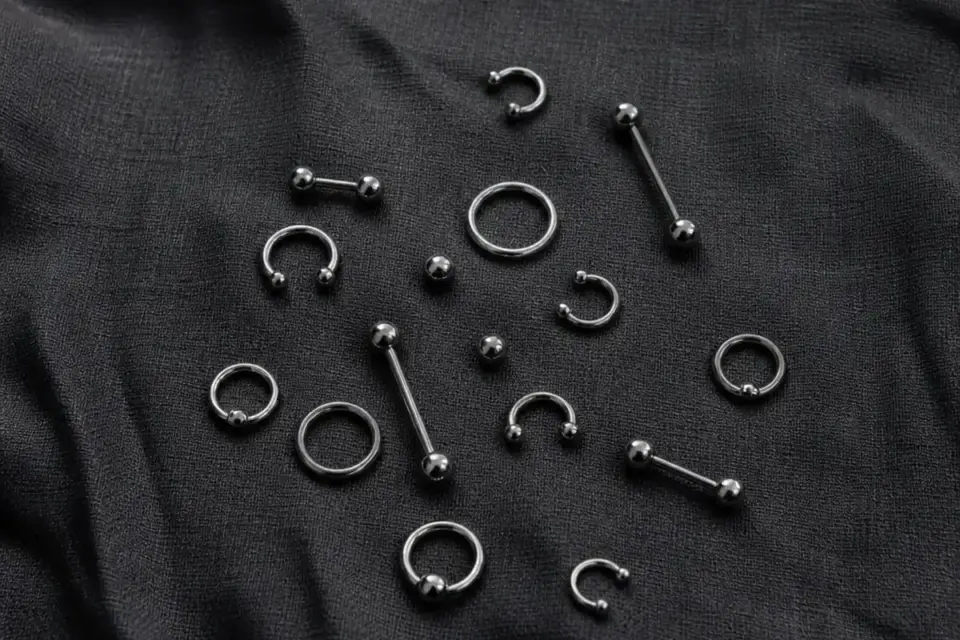
Pages on jewelry look at the materials most often found in piercing jewelry, such as titanium, surgical steel, niobium, gold and bioplast. Each entry explains how a material behaves in the body, why some people react to certain metals, and what finishes and shapes are common. The focus stays on what the materials are and how they are described, not on where to find them.
How the pages are organized
Each article in the desk begins with a short summary, followed by sections on the placement, the style of jewelry, and the healing process. Healing is described as a general sequence: the body responds to a new opening, swelling and tenderness appear, and the tissue slowly matures. Pages describe these stages in descriptive terms without setting fixed timelines.
Health topics are kept general and descriptive. Pages cite public sources such as health authorities, museums and libraries, and readers can follow those references to read more. The desk is organized so that a reader can move from a basic overview of a placement to a deeper look at materials and healing.
 StylesTraditional, blackwork, fine line, irezumi and the other families of tattoo design.
 IdeasMotifs, symbols, placement and sizing, explained before the first sketch.1 page
 AftercareHow skin heals after a tattoo or a piercing, with sources from health authorities.
 HistoryWhere tattooing and body art come from, and what they mean in different cultures.